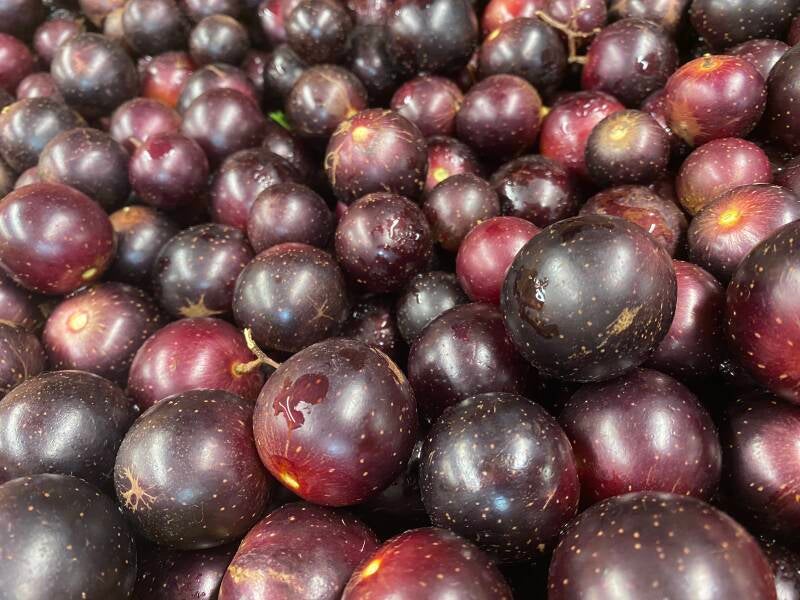
You either love 'em or hate 'em. The muscadine grape is native to the southeastern United States and was the first native grape species to be cultivated in North America. Muscadine refers to the darker grapes in some circles, while Scuppernong refers to the white or bronze grapes. The natural range of the grapes extends from Delaware to central Florida and occurs in all states along the Gulf Coast to east Texas. They are among the richest sources of antioxidants found in nature.
Muscadine grapes are a leading food source for a potent cancer-fighting substance called resveratrol. They have thick skins and seeds that you can eat or spit out--it is a matter of preference! They are commonly used for making wine, juice, jellies, and preserves. Beyond these, they can be eaten fresh, cooked, or used in baked goods and even as a survival food. Their skin and seeds, rich in antioxidants, are also used in functional foods, dietary supplements, and personal care products.
Scuppernongs are the original variety of Muscadine grapes. They were discovered along the banks of the Scuppernong River in North Carolina. Scuppernong grapes contain vitamins B and C, potassium, trace minerals, antioxidants, and a high amount of fiber. The skin and seeds are also high in resveratrol, which is a natural antibiotic that has been shown to have positive effects on human heart health and lowering cholesterol. Most commonly used to make jams, jellies, preserves, juices, and wines, they are also used in grape hull pie, which is a classic Southern recipe that includes the skin of the grape in the pie to incorporate nutritional properties. Scuppernong grapes can also be roasted and used alongside savory meats like pork, brisket, and sausage and served with whole grains such as rice or quinoa. Scuppernong grapes pair well with basil, vanilla, lemon, butter, sugar, cream, and white meats such as chicken and fish. Scuppernong grapes are the state fruit of North Carolina and have been featured in country music songs, literature, and art.
Add comment
Comments